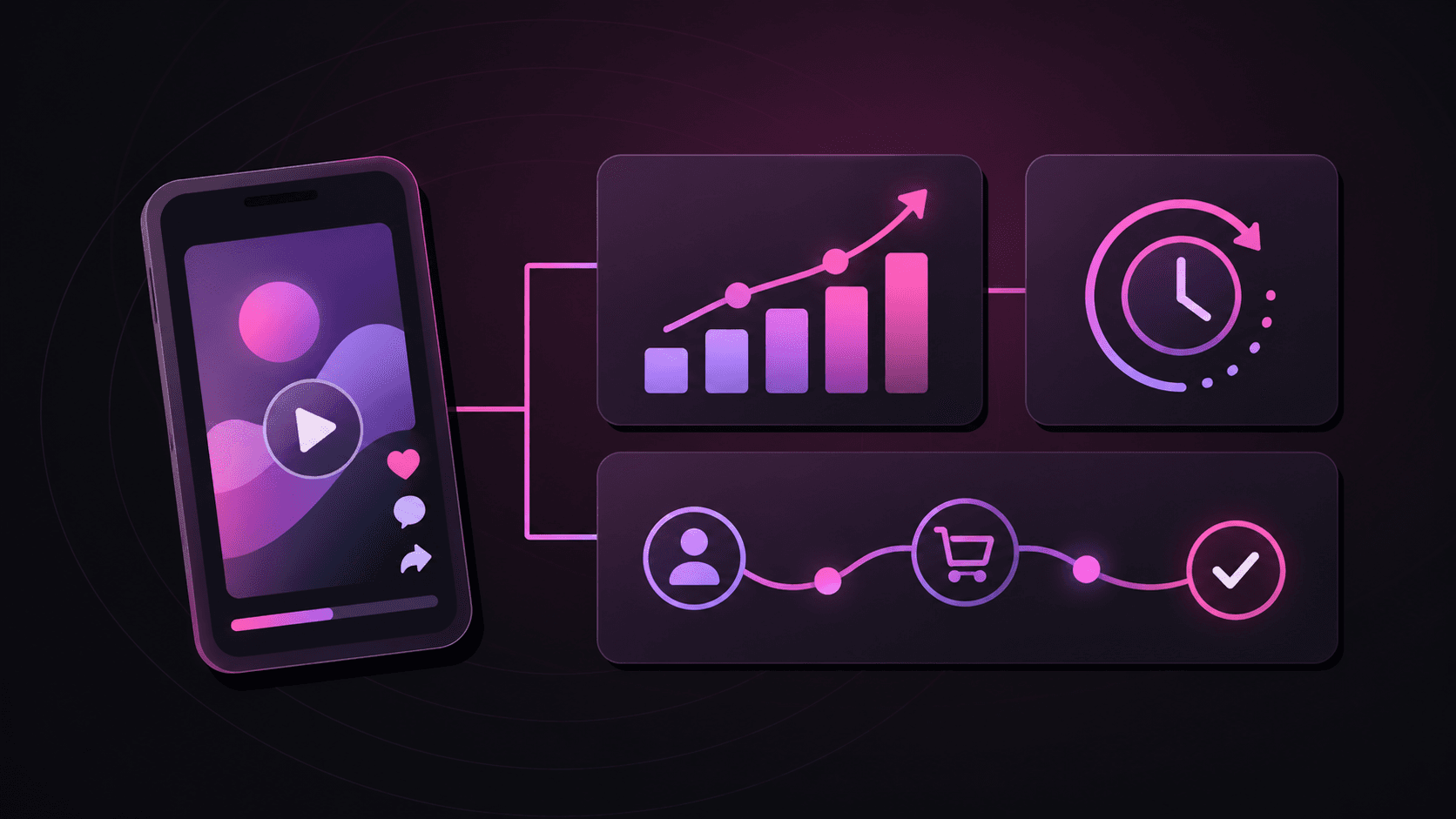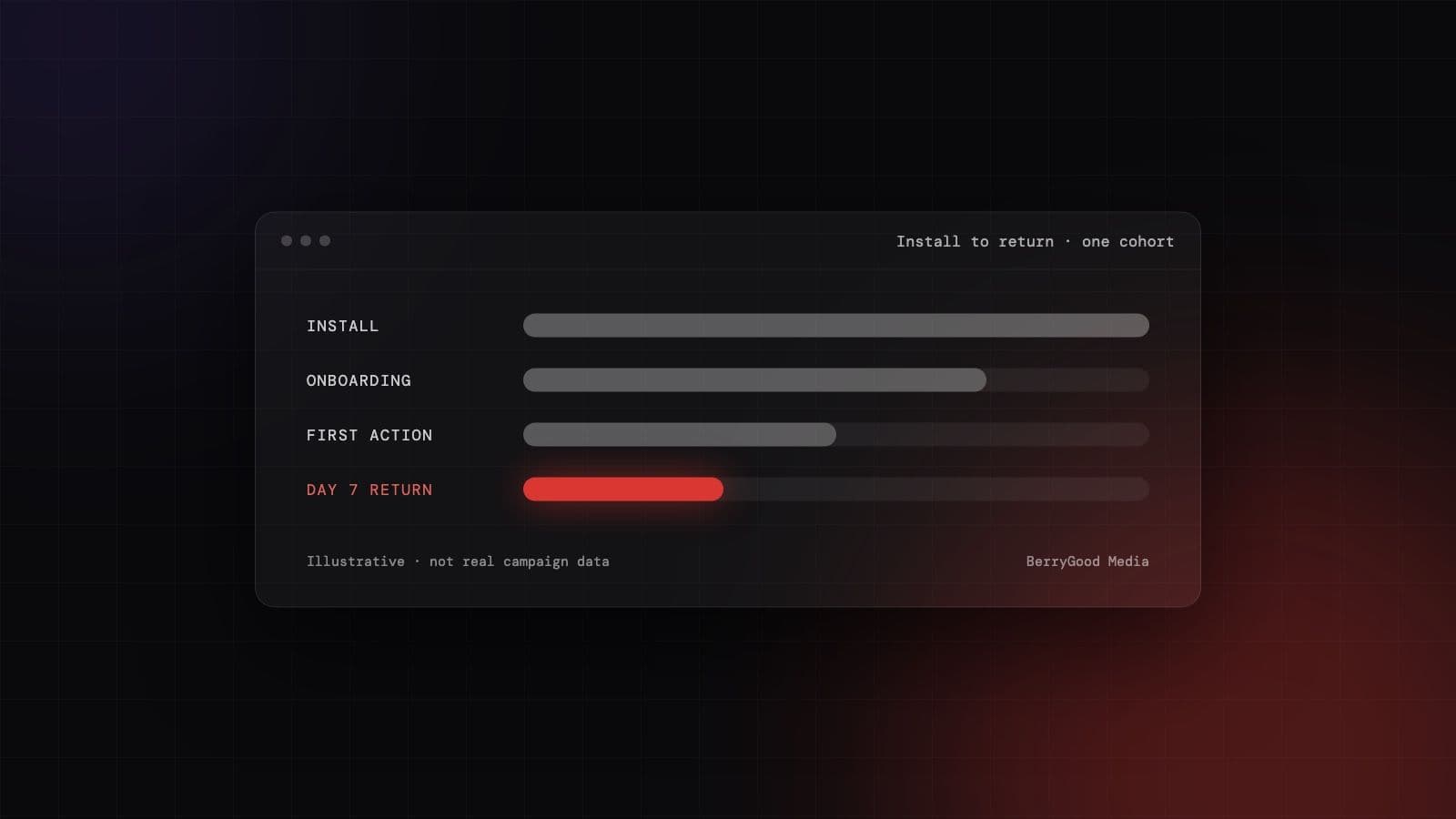
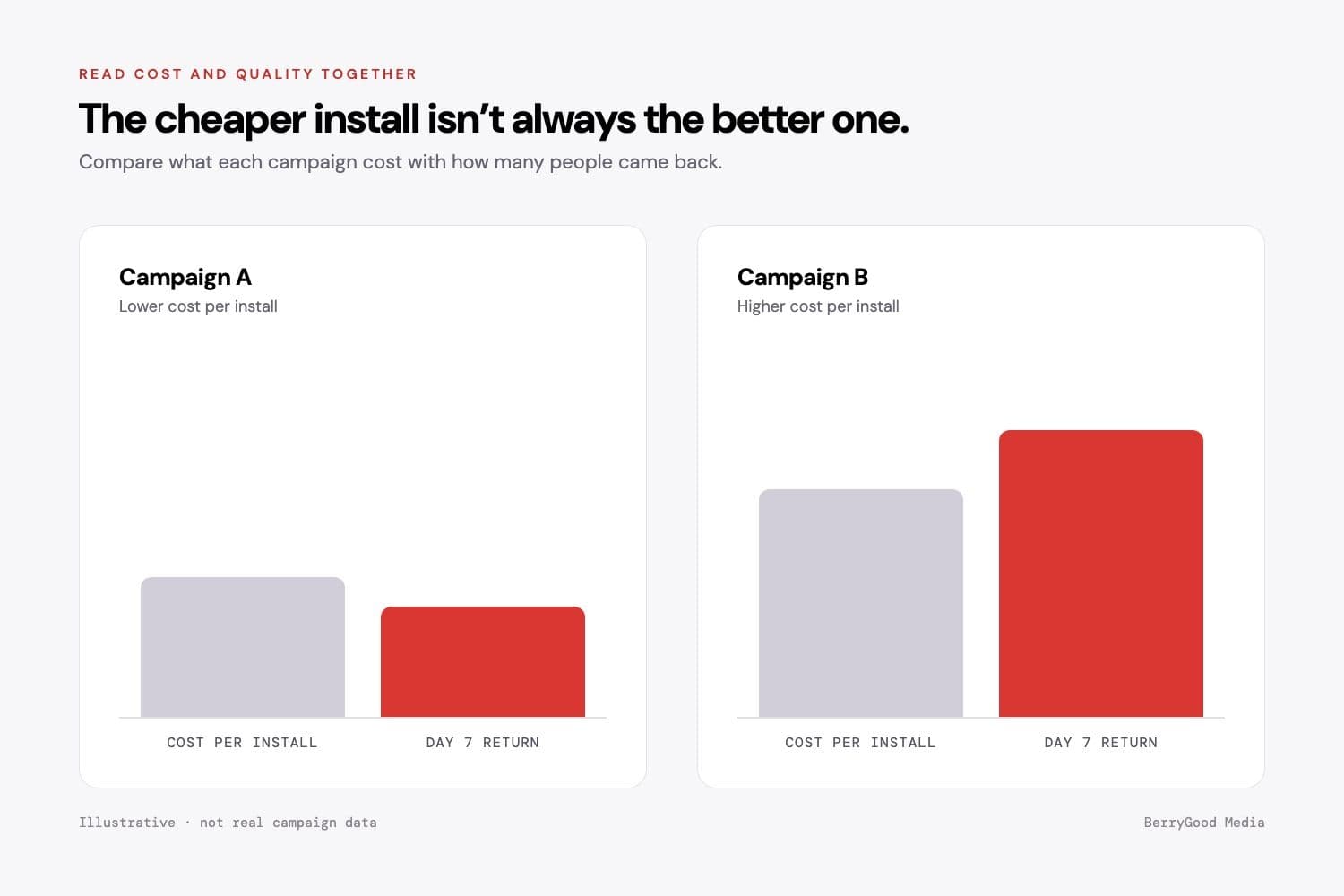
A lower cost per install can look encouraging. It tells you what it cost to bring someone to your app, but it does not tell you whether that person found value or came back. Start with the behavior your app needs to support, then build your measurement around it.
Define a useful next step
Choose an event that reflects a meaningful experience. That might be completing onboarding, finishing a first task, or making a purchase. The right event depends on your product and how people use it. Avoid treating every screen view as a sign of intent.
Write down the event definition, the measurement window, and the source of truth before comparing campaigns. A consistent definition makes the discussion more useful when marketing and product teams review the same numbers.
Read cost and quality together
Compare acquisition cost alongside activation and retention for the same cohort. Account for attribution delays, sample size, and differences between audiences. A small early cohort can suggest a question to investigate; it cannot establish a reliable pattern on its own.
Build a decision routine
Set a review cadence and decide what evidence would support continuing, adjusting, or stopping a test. Record what changed so the next review has context. Keep individual user data out of shared campaign notes.
The aim is a clearer decision, not a promised outcome. Measurement gives your team a way to learn where the experience is working and where it needs attention.